
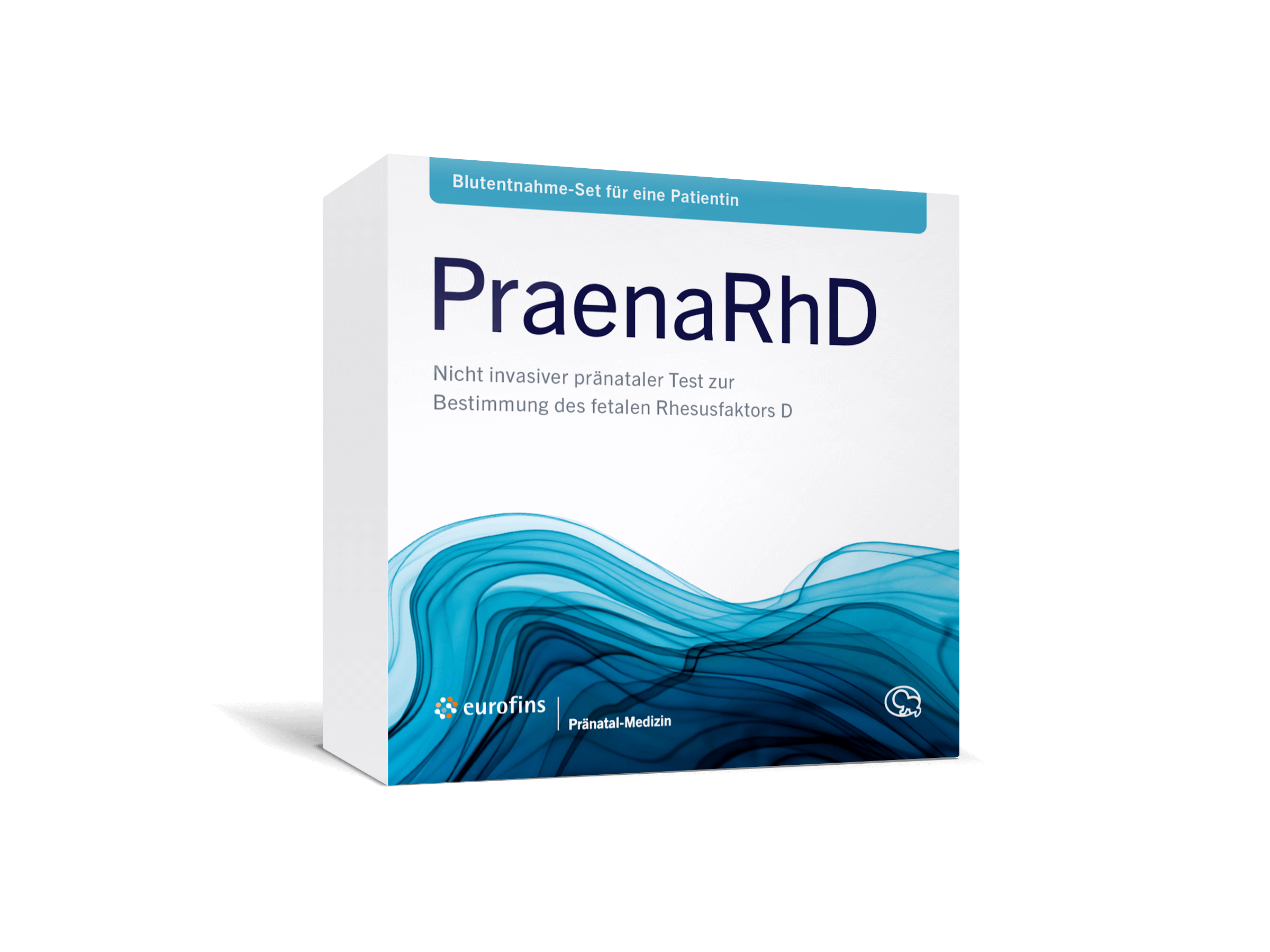

PraenaRhD
The prenatal rhesus test
Non-invasive prenatal RhD genotyping from maternal blood
Are you pregnant and rhesus-negative?
Then the following information may be important to you.
- Non-invasive prenatal RhD genotyping from maternal blood
- For rhesus-negative pregnant women with singleton pregnancy
- From gestational week 11+0 p.m.
- Delivery time 10 working days per analysis (Monday to Friday, without holidays)
Significance of the rhesus factor in pregnancy
At the start of your pregnancy, your doctor determines your rhesus factor. If your blood is rhesus-negative and your child’s blood is rhesus-positive, this can lead to complications. This is due to the fact that, if blood cells from your child enter your bloodstream, your body forms antibodies against these rhesus-positive blood cells. If these antibodies are then transmitted to your child via the placenta, your maternal immune system destroys the child’s red blood cells. As a result of this, your child no longer receives a sufficient amount of oxygen. However, oxygen is essential for the healthy development of your child.
Precautionary measures for rhesus-negative pregnant women: Anti-D prophylaxis
Today, the immune reaction of the maternal immune system to the unborn, rhesus-positive child is prevented through a corresponding precautionary measure, known as anti-D prophylaxis.
Anti-D prophylaxis is often unnecessary
According to the applicable maternity guidelines in Germany, all rhesus-negative pregnant women should receive anti-D prophylaxis as a precautionary measure. From a medical viewpoint, it is only useful for six out of ten rhesus-negative pregnant women, because they are expecting a rhesus-positive child. This means that four out of ten rhesus-negative pregnant women receive anti-D prophylaxis without any medical need, since their unborn child is rhesus-negative. Nowadays, medical professional associations agree that anti-D prophylaxis in rhesus-negative pregnant women with rhesus-negative unborn children is in fact not necessary.
PraenaRhD
The prenatal rhesus test of Eurofins Pränatal-Medizin
You can now have the rhesus factor of your unborn child determined from your blood starting from gestational week 11+0 p.m. If your child is rhesus-negative, you can decide together with your doctor if you wish to forgo the anti-D prophylaxis because, just as with many other drugs, it is not free of possible adverse effects and risks. Please contact your doctor for detailed information and advice.

The PraenaRhD
Test costs
Please inquire with your doctor in advance about the total costs incurred.
You can have the PraenaRhD carried out together with the PrenaTest®. In this case, only one blood sample is required.

The PraenaRhD – with high test accuracy
Test procedure
This is how it works:
Genetic counseling
Genetic information and advice is given by the doctor in accordance with the German Genetic Diagnostics Act (GenDG). National regulations in other countries may vary.
Collection and dispatch by a courier
Blood is taken from the arm vein after written approval for the genetic examination.
The blood sample is collected from the practice on the same day and arrives in the laboratory on the next business day (Mon-Fri, excluding public holidays).
Laboratory analysis
The test generally takes 10 business days (Monday to Friday, not including holidays). It starts after the blood sample is received in the laboratory and may be prolonged in the event of a duplicate analysis.
Test result
The test result will be sent to the responsible doctor by fax and post. He/she explains the result and discusses the next steps with the patient.
Would you like to speak to your doctor about the PraenaRhD?
An important decision! So that you can think of everything
- write down your open questions beforehand,
- write down your doctor’s answers,
- dare to ask if you do not understand something.